When Words Become Objects
Watching language leave the screen and enter the physical world
For most of its life, writing exists behind glass.
A sentence moves from Notes to Markdown to a CMS. A paragraph gets rewritten because the rhythm drifts. Entire sections disappear because they sound too aware of themselves.
Nothing feels fully settled on a screen.
Digital writing stays fluid by design. Adjustable. Weightless. Temporary. Even after publication, the work still feels one revision away from changing again.
Then one day the writing becomes an object.
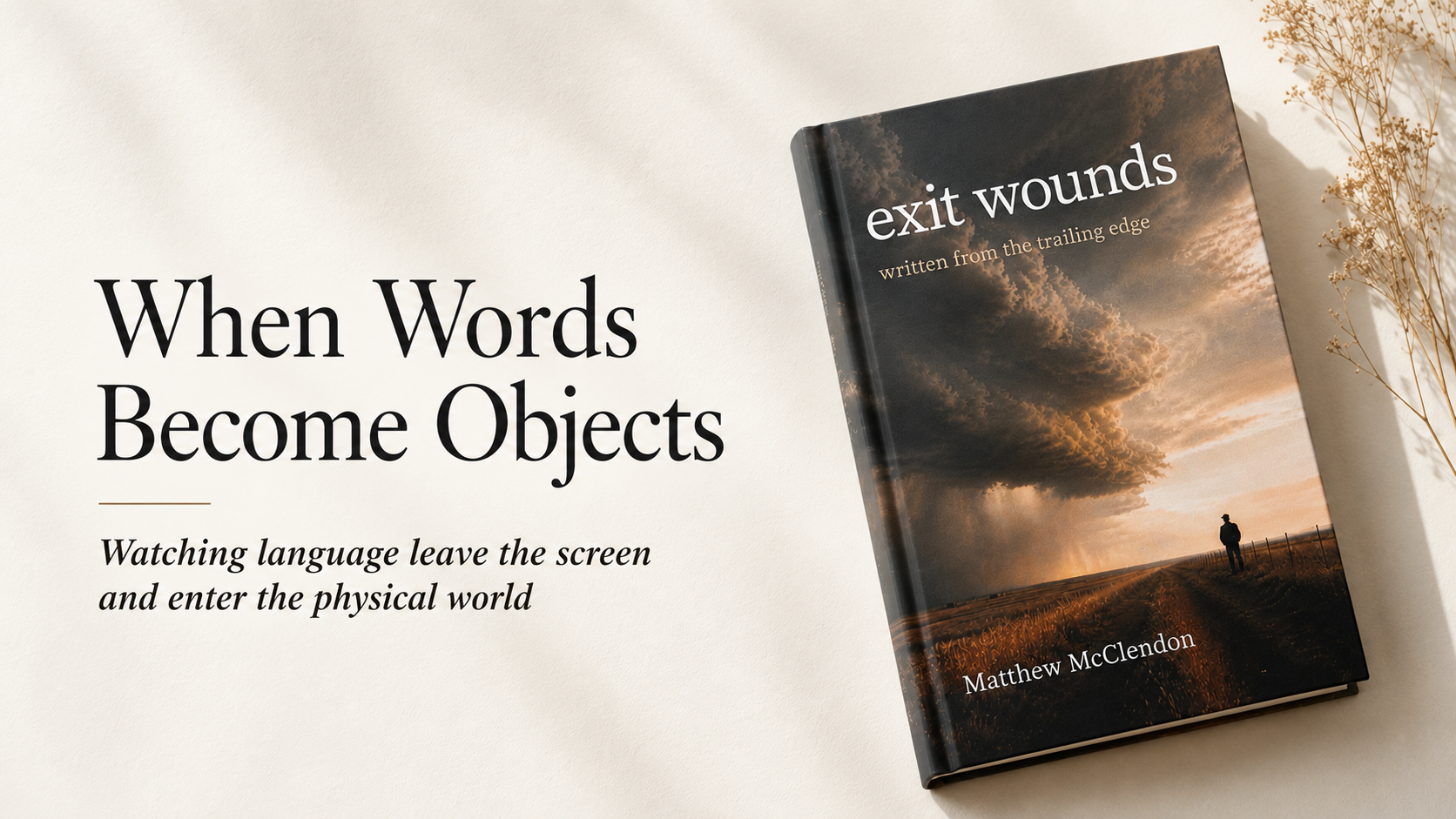
Paper changes the emotional physics of language. The words suddenly have dimensions. Margins. Weight. Cloth binding. A spine that resists slightly the first time the cover opens. Sentences that once lived inside browser tabs now occupy physical space in the world.
The transition feels stranger than I expected.
Screens encourage motion. Refreshing. Editing. Optimization. A sentence online can be changed ten seconds after publication and quietly replaced before anyone notices.
A printed page refuses that relationship.
Once the words land there, they stay.
That permanence carries weight for someone accustomed to designing inside systems built around velocity. Screens reward movement. Books reward stillness. A screen asks to be refreshed. A book asks to be revisited.
I noticed something else while holding the proof copy for the first time.
The imperfections immediately surfaced.
Tiny alignment issues. Slight production artifacts. Details most readers would never consciously notice. My brain immediately started reaching for another export, another correction, another pass through the files.
Then the realization hit me:
unfinished things are the only things capable of remaining perfect.
An unfinished project never has to survive paper stock, binding glue, shipping damage, lighting conditions, gravity, or time. Real objects do. The moment writing enters the physical world, it becomes subject to reality instead of imagination.
Oddly enough, that is also what makes it feel alive.
A sentence on a screen competes with notifications, tabs, battery percentages, and the velocity of the feed. A sentence printed on paper can sit silently on a shelf for twenty years waiting for the right person to pull it down.
The internet distributes language efficiently.
Books anchor it.
I used to think publishing a hardcover book would feel cinematic. Some grand emotional finish line after years of writing.
The actual feeling is quieter than that.
Closer to recognition.
The words are no longer passing through the screen.
They exist in the world now.

Subscribe to Amid the Noise
Amid the Noise is an ongoing body of work on signal, systems, governance, AI, and the structures that shape human judgment under pressure.
Subscribe to receive new essays as they are published.