When We Rob Moments of Their Weight
Naming without anesthesia
I thought I was Jesus.
Not in the robes-and-halo sense, rather in the way I carried myself—believing my empathy gave me authority, believing I could see into people’s struggles so clearly that I knew what was best for them. I wasn’t cruel; I was trying to help. In my “helping,” I robbed moments of their weight, softened their edges with my words, and decided for others what their reality ought to be. That wasn’t empathy.
That was arrogance.
The lesson I keep returning to is simple: words matter. Not only for how they sound, but for the philosophy they carry with them. Every word is a worldview in miniature. Every phrase frames reality in ways that either respect or diminish it.
1. The National Lie: Defense vs. War
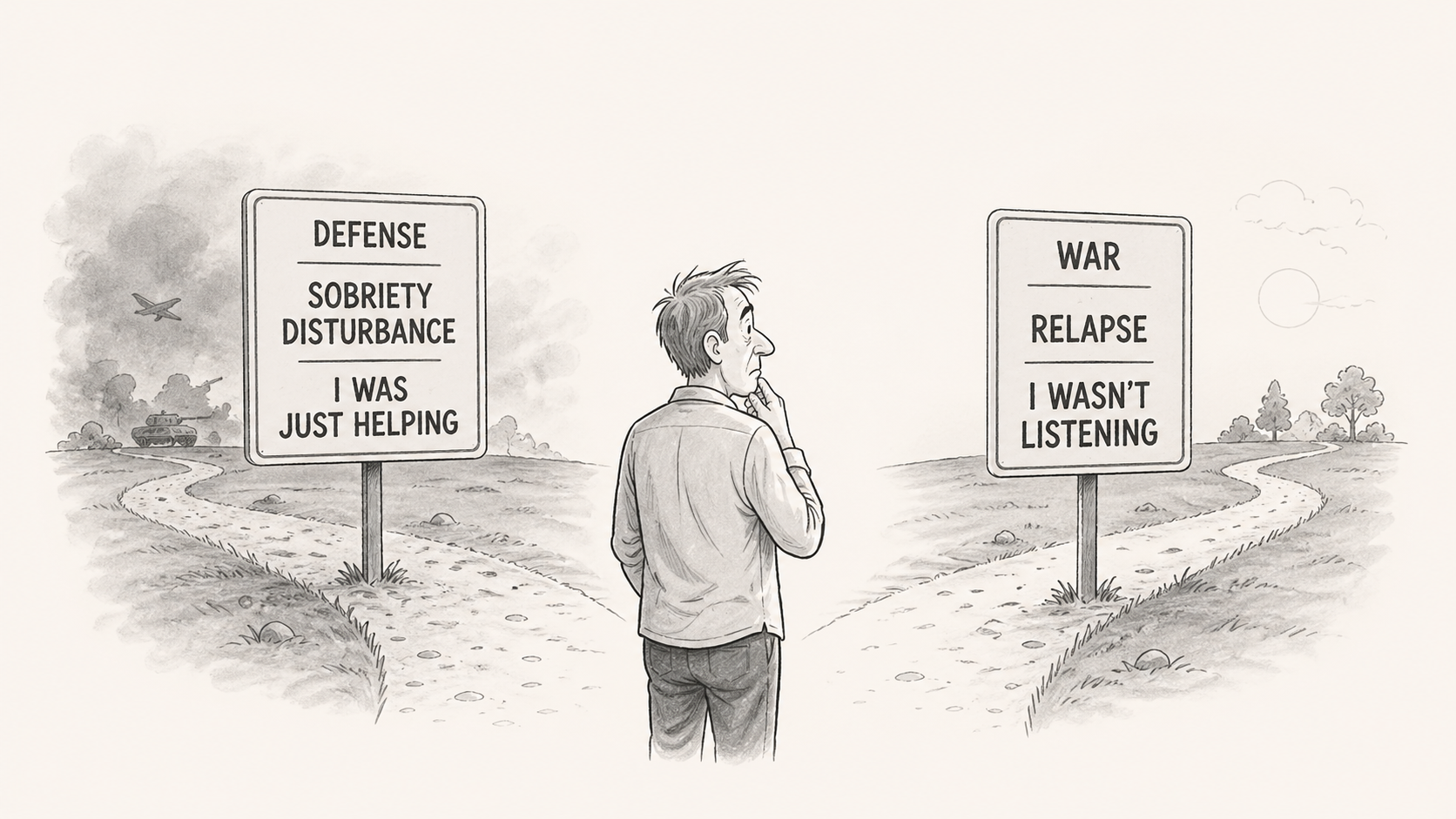
When the Department of War was renamed the Department of Defense in 1949, the shift was not about precision. It was about carefulness. “Defense” implies safety, guardianship, a shield. In truth, America’s military has spent the decades since projecting power far beyond its borders, waging offensive campaigns across the globe. Calling it “Defense” eases our conscience and makes the public feel like we are protectors rather than aggressors.
Trump’s instinct to revert to “Department of War” may have been politically crass, yet in its bluntness, it exposed something real: words shape perception. If we are at war, we should call it war. To call it otherwise is national arrogance disguised as civility.
Words matter.
2. The Institutional Lie: Sobriety Disturbance
In recovery circles, I recently heard relapse referred to as a “sobriety disturbance.” On paper, the phrase sounds compassionate—gentler, less shame-inducing. The reality is harsher: relapse is devastating. It is not a disturbance, like a neighbor’s television turned up too loud. It is a collapse of mind, body, and spirit.
When the word is sanded down to something clinical and neat, the experience is stripped of its urgency. People die in relapse. Families shatter. Lives are lost. Calling it a “disturbance” diminishes the gravity of what is at stake.
Words matter.
3. The Personal Lie: My Jesus Complex
For years, I believed my empathy was limitless. I believed I could see so deeply into others’ pain that I knew what was best for them. I spoke with conviction, believing I was lifting them up, when in fact I was often talking over them. I wasn’t listening—I was dictating.
My “Jesus-complex” hid the fact that I wasn’t listening.
Words matter.
The Weight of Truth
Language matters because it is never just a matter of language. Euphemism can be compassionate, yet it can also be cowardly. “Defense” hides war. “Sobriety disturbance” hides relapse. My own “Jesus-complex” hid the fact that I wasn’t listening.
The most respectful thing we can do—for each other, for our institutions, for ourselves—is to name things as they are. Not to dress them up, not to soften the sting, but to let the sting teach us what it must. Every moment has its own weight, and every weight deserves to be carried in truth.
Words matter.
Always.

Subscribe to Amid the Noise
Amid the Noise is an ongoing body of work on signal, systems, governance, AI, and the structures that shape human judgment under pressure.
Subscribe to receive new essays as they are published.