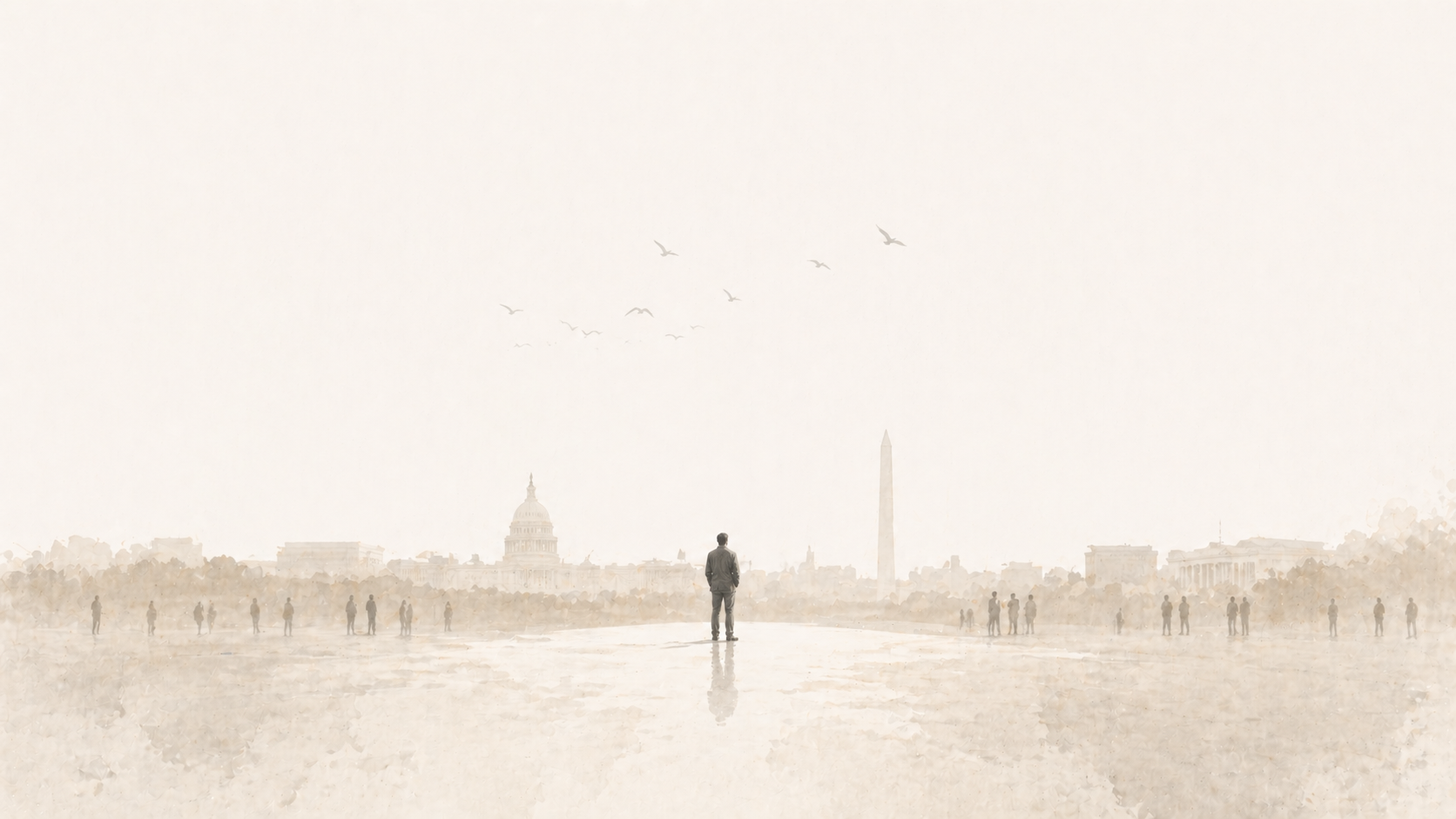
Respect Without Martyrdom
Respect without agreement
No one deserves to be assassinated for their political beliefs. That is where I begin, and where I return. Violence is never an answer to disagreement. This tragedy compels us to rethink how we handle division: can we respect those we fiercely disagree with, without dehumanizing them? That, for me, is the urgent lesson.
Respect Without Agreement
I’ve always believed in respecting those who dedicate their lives to public service—even when I disagreed with them. Over the past year, as I’ve stepped more actively into my own civic voice, that respect has deepened. It feels different now. I no longer only observe; I reflect with the awareness that stepping forward myself carries weight.
I think of John McCain. I disagreed with him more often than not. His positions rarely matched mine, yet I respected every word he spoke. Why? Because he spent nearly his whole adult life in service. A Navy fighter pilot. A prisoner of war. A senator for Arizona. From the moment he left high school, he was in public life, fighting for something beyond himself.
Whatever my differences with him, that kind of dedication deserved respect.
This is what I think about now as I reflect on Charlie Kirk.
The Hard Stops
There are limits to what respect can cover. Calls for genocide, eliminationist rhetoric, or the dehumanization of whole groups of people are hard stops—lines that must never be crossed. A Nazi chanting “kill the Jews,” a racist shouting “kill all the Blacks”—these are not opinions in the public square; they are incitements to violence, the erosion of humanity itself.
Beyond those hard stops lies a vast field of legitimate disagreement: how we structure our federal budget, how we approach foreign policy, how we balance rights and responsibilities, and how we define the separation of church and state. These are the things that ought to be contested, debated, even fiercely so—yet always within the bounds of civic respect.
The Kirk Flashpoint
Charlie Kirk’s death confronts us with a different kind of lesson. He was not a man I often agreed with. His rhetoric was sometimes inflammatory, even reckless. Yet he was out there—speaking, building, persuading. He was part of the civic fabric.
His assassination is a civic tragedy, not because he’s a martyr, but because it exposes the deep fracture of a country stuck in a winner-takes-all mentality that sees opponents as enemies.
In such a climate, violence becomes imaginable. Targets emerge where there should only be fellow citizens.
Kirk’s life—whatever else one may say of it—has become a flashpoint, a mirror reflecting back to us just how broken our civic culture has become.
A Dangerous Civic Culture
The lesson is not about Kirk alone. It is about all of us.
Treating politics as a blood sport breeds real danger. Casting every election as existential, every disagreement as betrayal, suffocates the middle ground, punishes nuance, and drives out bridge-builders.
That is the true danger of the 50/50 divide: not just paralysis, but escalation. A country that seesaws between extremes eventually tips over.
History gives us warnings. The decades before the Civil War were marked by the same kind of zero-sum thinking, where compromise was cast as weakness and opponents were demonized rather than debated. Nations that treat political disagreement as a prelude to violence do not simply fracture—they unravel. We are closer to that precipice than many want to admit.
Charlie Kirk’s death forces us to ask: Is this the path we want to continue down? Is endless division, grievance, and retaliation the civic inheritance we want to leave our children?
The Real Lesson
For me, the answer is no. His assassination teaches that we must stand up for our beliefs, fix rather than flame, speak to heal rather than harm, and defend convictions without dehumanizing opponents.
I know I could be a target myself—for being gay, politically active, or simply speaking differently. That makes the lesson personal: I want a country where difference isn’t punished by violence, but respected and welcomed.
Memorial Without Martyrdom
This is my way of memorializing Charlie Kirk—not because I agreed with him, but because I respect anyone who dedicates their life to their beliefs. Whether I shared his views or not, he was woven into our civic fabric. His death reminds us that disagreements must not lead to erasure.
We honor his contributions best by choosing a better path: rejecting division, protecting dialogue, and remembering that respect—while not agreement—remains the cornerstone of a healthy civic life.
Imagine what our political landscape could look like if more of us were to commit to this ethos. Picture a country where disagreement sparks curiosity instead of contempt, where public debates are robust but never personal, and where those who step into the arena—regardless of their views—are met with both accountability and basic dignity. In such a culture, we would not fear difference; we would welcome it as the lifeblood of democracy. We would see our opponents as necessary partners in the ongoing experiment of self-government.
This is the civic inheritance I hope we can build together—one where, no matter our disagreements, every person retains their humanity in our eyes.

Subscribe to Amid the Noise
Amid the Noise is an ongoing body of work on signal, systems, governance, AI, and the structures that shape human judgment under pressure.
Subscribe to receive new essays as they are published.