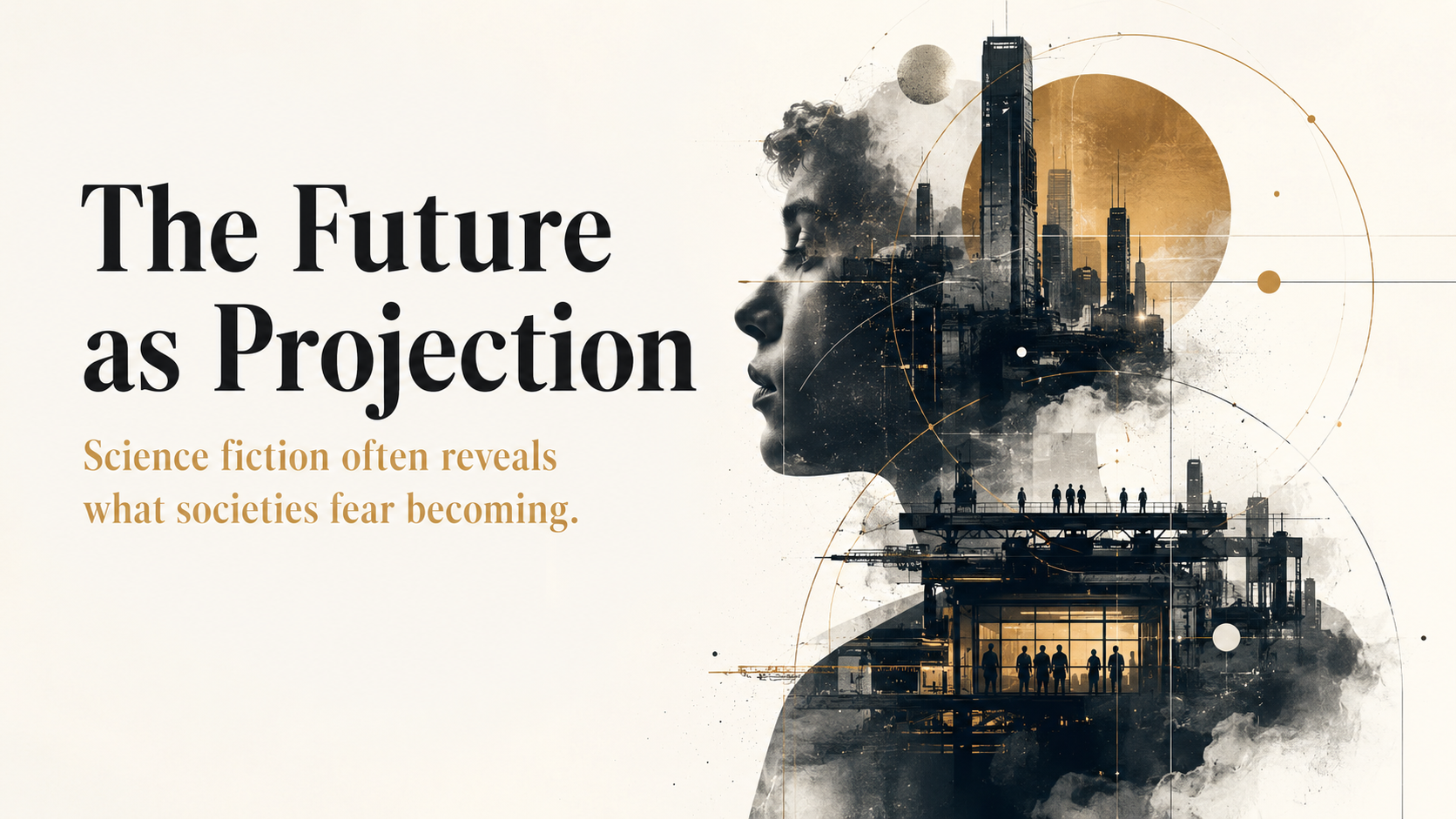
The Future as Projection
Science fiction often reveals what societies fear becoming.
Science fiction has never been particularly good at predicting the future.
It has always been excellent at exposing what a society fears becoming.
In the late 1970s, Alien gave us Weyland-Yutani. The monster was terrifying, but the deeper horror was institutional.
A corporation willing to sacrifice human beings in pursuit of a strategic asset. Workers treated as expendable. Decision-making hidden behind layers of distance and bureaucracy.
The fear was not the alien.
The fear was that profit structures would eventually outrank human life.
A few years later, Aliens shifted the tension again. Militarism. Escalation. Technological overconfidence. The Colonial Marines arrive believing superior firepower and doctrine can solve anything until reality tears through the illusion.
Different decade. Different anxiety.
Cyberpunk carried the same evolution forward. Governments fade into the background while corporations become sovereign powers. Identity becomes transactional. Citizenship becomes secondary to utility. Information becomes currency.
None of these worlds emerged in a vacuum.
They reflected the emotional climate of the societies creating them.
That may be the real function of science fiction.
Not prediction.
Projection.
A civilization trying to process its own trajectory through metaphor before it can articulate the fear directly.
The future in science fiction is often just the present with the volume turned high enough to finally hear it.

Subscribe to Amid the Noise
Amid the Noise is an ongoing body of work on signal, systems, governance, AI, and the structures that shape human judgment under pressure.
Subscribe to receive new essays as they are published.