The Day April Voted
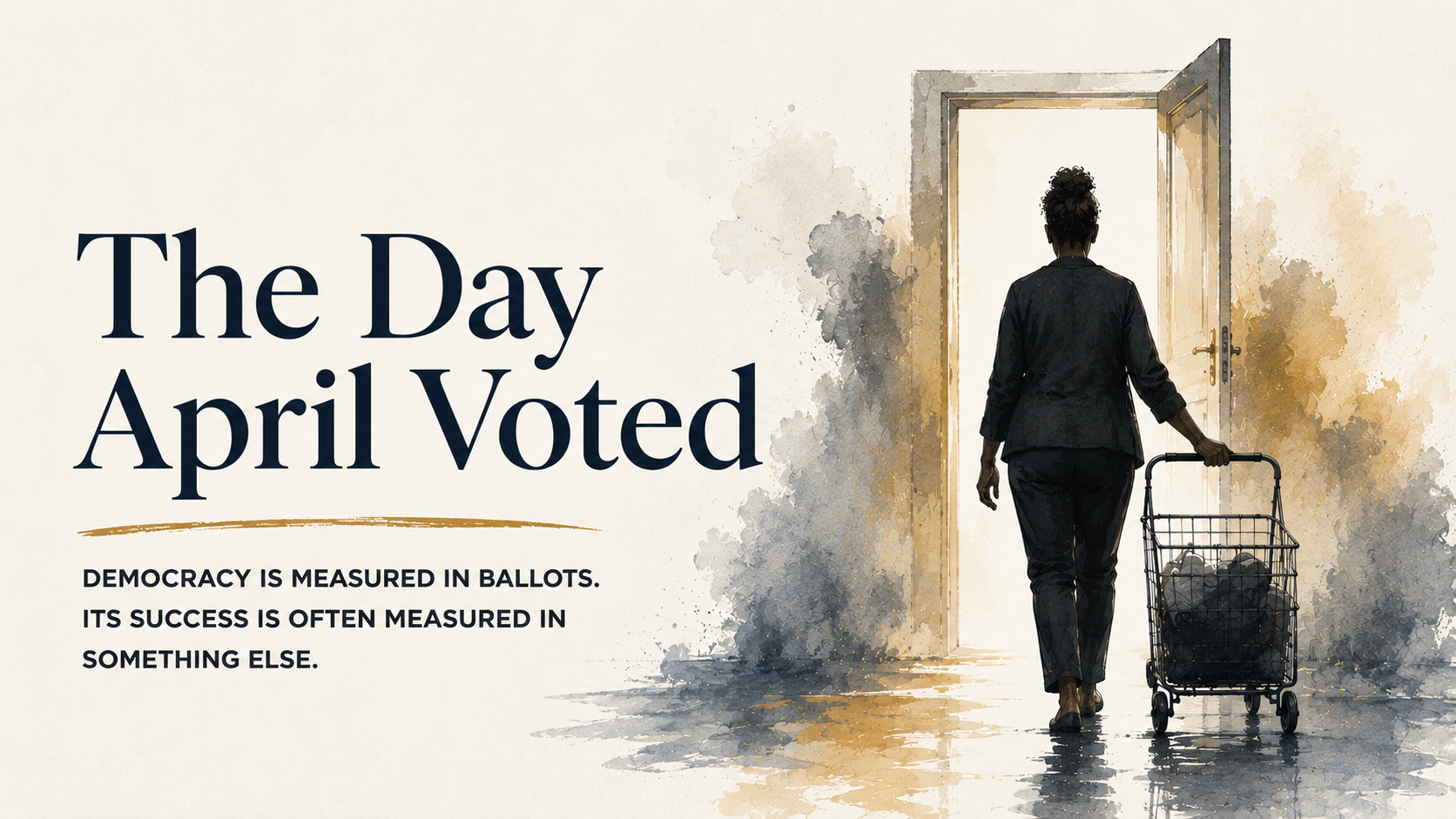
Democracy is measured in ballots. Its success is often measured in something else.
Yesterday, a woman named April came to vote.
She arrived with a shopping cart and several bags, introduced herself, shook hands, and smiled at everyone she met. She seemed genuinely happy to be there.
At first, she started filling out a Conditional Voter Registration form.
After a few moments, it became clear she was struggling to read the small print.
The vote center had a magnifying lens available for exactly that situation, so I handed it to her.
She was incredibly grateful.
When we checked the voter rolls, we discovered she was already registered and eligible to vote.
You could see the relief on her face.
What had started as a registration problem suddenly became a celebration.
I suggested using the touchscreen ballot, and with a few adjustments we enlarged the text to a size that was comfortable for her to read.
She lit up.
The tools were there.
The ballot was there.
The process worked exactly as intended.
A few minutes later, she cast her vote.
When she finished, I handed her several extra “I Voted” stickers.
She thanked everyone again.
Then she headed toward the door.
Before leaving, she stopped, smiled, and did a little victory dance.
The entire room smiled with her.
The moment has stayed with me.
Not because she voted.
Because of what happened while she was there.
For a few minutes, April was not being evaluated, screened, moved along, ignored, or treated as a problem to be solved.
She was simply a voter, a citizen, and a member of the community.
That distinction matters.
Much of our public conversation about democracy focuses on outcomes.
Turnout numbers.
Polling.
Candidates.
Campaigns.
Those things matter.
They are not the whole story.
Democracy also lives in the experience itself.
It lives in whether people feel welcome when they walk through the door.
It lives in whether they can participate without unnecessary barriers.
It lives in whether they are treated with dignity regardless of their circumstances.
The people who already feel included rarely tell us much about the health of a civic institution.
The people who expect exclusion, and instead encounter respect?
They tell us everything.
The system met her where she was.
The vote center did not ask April to prove she belonged before helping her participate.
It assumed she belonged and helped her participate.
That difference may seem small.
It is the difference between a bureaucracy and a democracy.
Yesterday, April cast a ballot.
What I remember most, however, is the dance.
She walked into the vote center pushing a cart and carrying everything she needed for the day.
She left with a handful of stickers, a smile, and enough excitement to dance on her way out the door.
That may not sound like much.
It felt like a great deal.
Democracy is measured in ballots.
Its success is often measured in moments like that.

Subscribe to Amid the Noise
Amid the Noise is an ongoing body of work on signal, systems, governance, AI, and the structures that shape human judgment under pressure.
Subscribe to receive new essays as they are published.