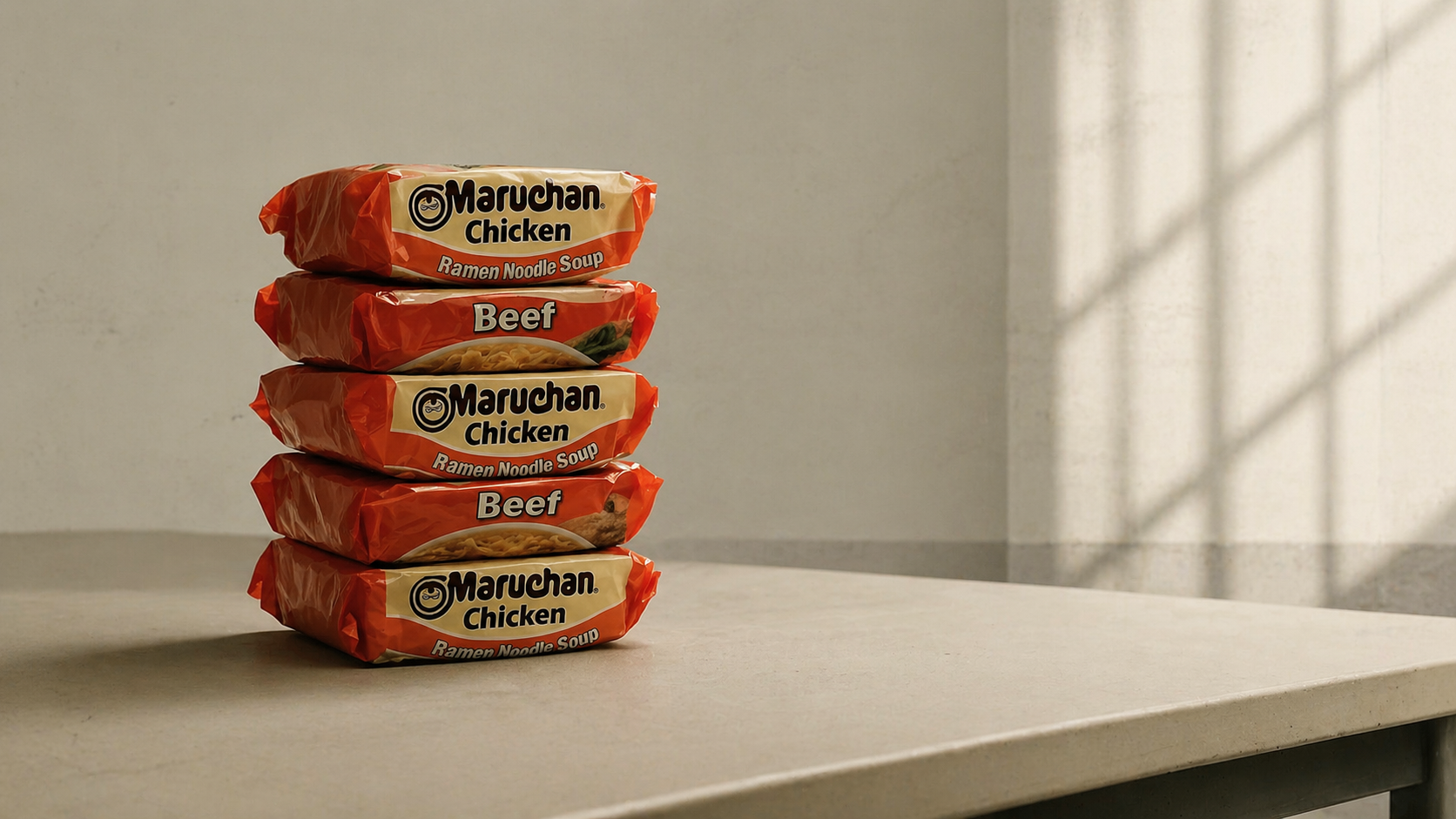
5 Soups
The Currency of Survival in Street Vernacular
I didn’t understand what “a soup” meant until I spent enough time listening to people the system had already written off.
They’d say it casually:
“You got five soups?”
Not ramen. Not noodles.
Soups.
I watched how the question landed. Every time.
It wasn’t about food.
It was about trust. Standing. Payback. Power.
In some corners of institutional life, ramen becomes more than a meal.
It becomes currency.
Language Under Pressure
I’ve never been incarcerated. That isn’t my story.
I have spent enough time adjacent to it, though—halfway houses, recovery centers, treatment programs, government buildings so beige they feel designed to erase people—to recognize the pattern.
Language adapts.
It compresses.
It carries more meaning with fewer words because it has to.
Street vernacular is not random.
It is engineered under constraint.
The Grammar of Survival
“Five soups” can settle a debt.
It can square a favor.
It can mean:
You showed up when I couldn’t.
You kept me from slipping when I was close.
I remember.
Entire emotional economies get compressed into syllables.
That is the brilliance of it.
A “soup” can be an apology, a lifeline, a peace treaty.
Sometimes all three.
Systems That Teach Silence
You see this compression anywhere people are confined or conditioned.
Group homes. Prison yards. Psych units.
Places where saying too much is dangerous, and saying too little can be misunderstood.
Communication becomes efficient.
Eyes. Posture. Tone.
The difference between “Nah, we straight” and “Say less” can determine whether something escalates or resolves.
If you don’t know, it sounds like slang.
It isn’t.
It’s fluency in an environment most people never have to learn.
Value, Rewritten
What “five soups” reveals is simple.
Value does not disappear when systems fail.
It relocates.
It reshapes itself into whatever can be exchanged, stored, and trusted.
Not stock options.
Not resumes.
Something tangible. Immediate. understood by everyone in the room.
Proof that even under pressure, systems of meaning still form.
What Most People Miss
From the outside, it looks small.
Five packs of ramen on a table.
From the inside, it carries weight.
It represents memory. Obligation. Continuity.
It proves that survival builds its own language when the dominant one stops working.
That’s what this is.
Not slang.
Not novelty.
A system.
And if you listen closely, it tells you exactly where the official ones stopped showing up.

Subscribe to Amid the Noise
Amid the Noise is an ongoing body of work on signal, systems, governance, AI, and the structures that shape human judgment under pressure.
Subscribe to receive new essays as they are published.