The Scene That Names the Drift
Recognition before admission
There is a moment in Star Trek Beyond that deserves more attention than it gets.
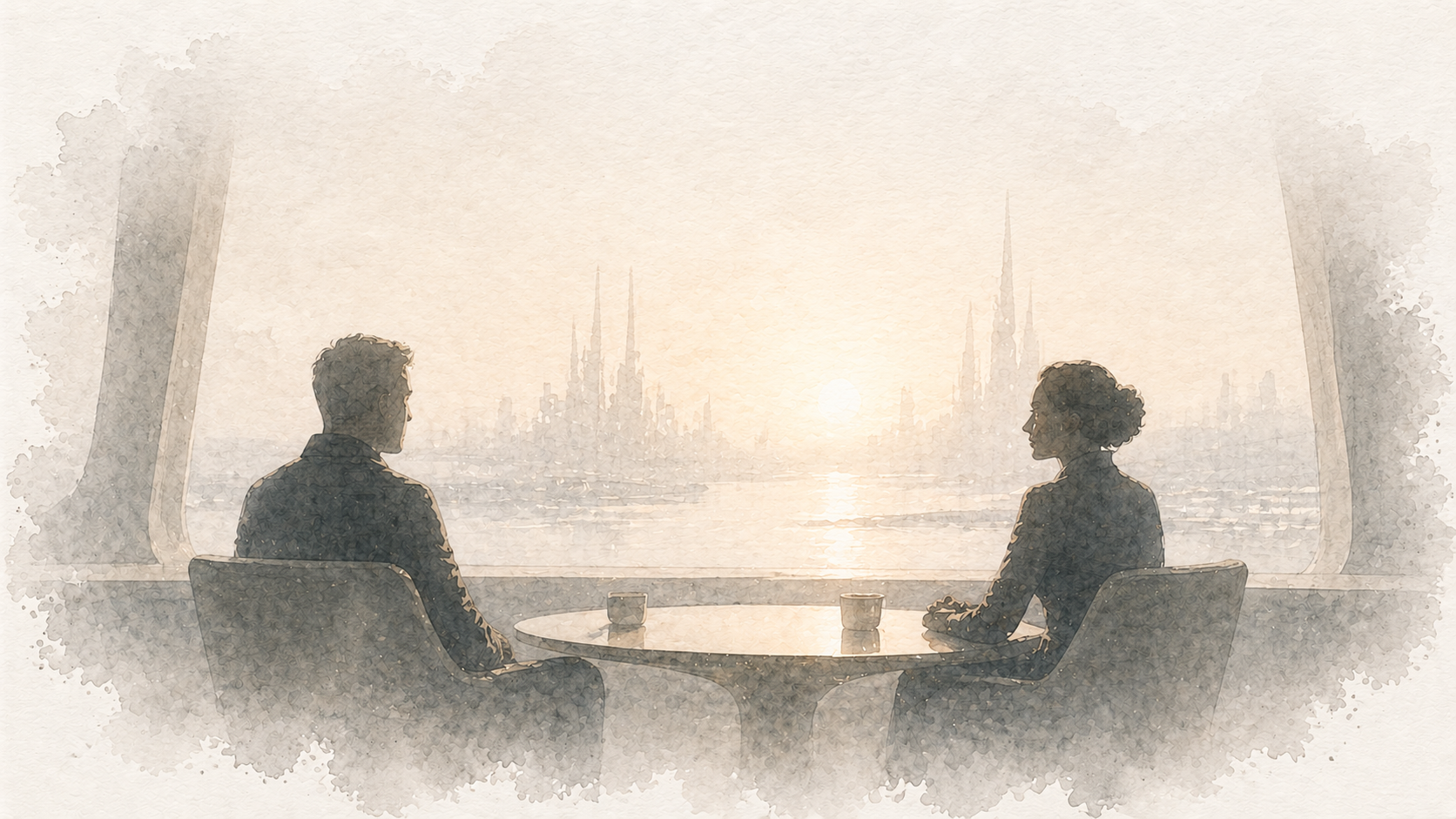
Kirk sits across from Commodore Paris in the cool light of Yorktown, the most advanced starbase ever built. Glass arcs above them. The city hums behind her. The room feels strangely still, almost suspended. It is the kind of stillness that arrives when someone finally sees you without judgment.
Kirk is restless. He hides it behind posture and protocol, although Paris reads him immediately. She carries herself with the composure of someone who understands that leadership has a cost, and that people rarely speak openly about the toll. Shohreh Aghdashloo plays her with a quiet authority that feels earned rather than performed, the same authority that made me fall in love with her work in The Expanse. Her presence never tries to impress. It settles into the space, confident in its own gravity.
Her voice carries the textured weight of someone who has lived with hard decisions long enough to understand their cost. When she tells him, “There is no relative direction in the vastness of space. There is only yourself, your ship, your crew. It is easier than you think to get lost,” it lands with a precision only calm truth can deliver.
What Paris offers Kirk in that moment is not a command. It is recognition.
She sees the drift before he names it.
She speaks to the quiet erosion that happens when purpose dulls and routine masquerades as direction. Her delivery is soft enough to sound like reassurance, yet honest enough to feel like a warning. The room becomes stillwater, a pocket of clarity in a film that otherwise moves at warp.
That is the brilliance of the performance. Real leadership is not theatrical. It is observational. It is the ability to look at someone who appears composed and acknowledge the turbulence under the surface. She offers Kirk a truth he is not ready to admit, yet she does it with enough humanity that it becomes an invitation rather than an indictment.
The film uses that conversation as a hinge. Everything that follows, from the ambush in the nebula to the chaos on Altamid, forces Kirk back into the parts of himself he had forgotten. Instinct. Trust. Connection. The moment Paris speaks to him, she sets the emotional trajectory for the entire story. Kirk spends the rest of the film proving her right and fighting his way back to the captain he feared he no longer was.
That scene resonates with me for reasons that sit below language.
I know what it feels like to lose direction without realizing it. I know what it feels like to perform stability while drifting further from the person I meant to be. Watching Kirk hear that truth felt familiar. When Paris names the drift, she names the danger of complacency and the grace of recognition.
In the end, the power of the scene lies in its honesty. Leadership is not heroic. It is lonely. It asks you to stay present when everything in you wants escape. It asks you to remember who you are when the path grows quiet.
That is why I return to it.
It does not just frame Kirk’s journey.
It frames mine.

Subscribe to Amid the Noise
Amid the Noise is an ongoing body of work on signal, systems, governance, AI, and the structures that shape human judgment under pressure.
Subscribe to receive new essays as they are published.