The Last Giant
When structure gives way to chaos
A Memory from Oklahoma City
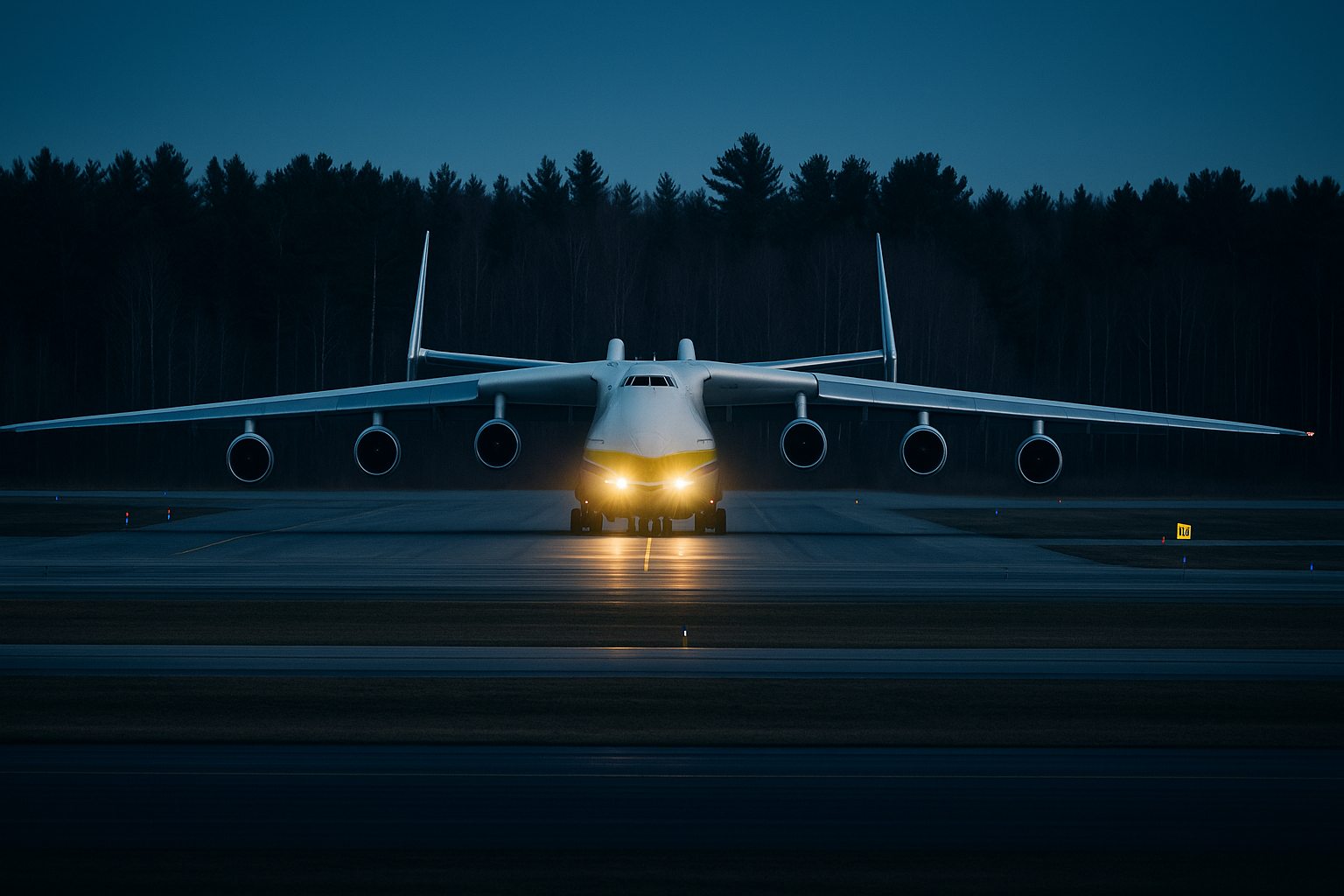
I walked through the Antonov An-225 Mriya as a teenager in Oklahoma City. Six engines. A cargo bay so vast it altered the acoustics around your body. You did not board it so much as enter it, the way you enter a cathedral built for machinery instead of worship.
That day, a stunt pilot crashed during the air show and died. The extraordinary and the tragic intertwined themselves in my memory. I carried that image forward without knowing how history would sharpen it later.
Back then, the world insisted that the Cold War had ended. The Soviet Union had collapsed, the West had declared victory, and everyone said we were safe from superpower brinkmanship. The An-225 became a curiosity, a relic from a rivalry we believed had dissolved.
We were wrong.
The Cold War Didn’t End, It Shifted Shape
The An-225 emerged from an era that thought it was concluding. Engineers built it to move space shuttles and outsized cargo for a country that no longer exists. When that country dissolved, the aircraft lingered like an orphaned monument.
The United States adjusted its language to protect its pride. The C-5B Galaxy could no longer be called “the world’s largest aircraft,” so it became “the free world’s largest aircraft.” The qualifier did most of the work. It allowed us to keep the superlative without acknowledging that someone else had surpassed us.
We told ourselves the Cold War had been resolved. We spoke as though the world had outgrown danger. The airplane became a footnote in a museum of forgotten rivalries.
Then the world reminded us that rivalries rarely disappear. They wait.
Mriya’s Destruction Announces a Different Kind of Conflict
When Russian forces attacked Hostomel Airport in February 2022 and destroyed the An-225, its death did not feel like a Cold War epilogue. It felt like a prologue to something harsher.
The Cold War had guardrails. Backchannels. Predictable escalation paths. Both sides believed in the importance of surviving the standoff. The confrontation unfolding today is not bound by those agreements or assumptions. It moves through cyber sabotage, disinformation corridors, paramilitary proxies, and weaponized infrastructure. It plays out on a global stage without the choreography that once kept disaster at bay.
The An-225’s destruction lives inside that context. It was not just collateral damage. It was an early signal that the era of concealed hostility had ended. A giant born in a structured rivalry died in a chaotic one.
What the Plane Means Now
When I walked through the An-225, the world believed it had graduated from catastrophe. We thought superpower conflict belonged to the past. The idea that this aircraft would one day be destroyed in a live assault on a European capital would have felt absurd.
Yet here we are.
The An-225’s life belonged to the Cold War.
Its destruction belongs to the century now unfolding.
One era built it. Another erased it.
Its story, like so many others, proves that history does not end. It only shifts direction.
The Last Giant
The An-225 was the largest aircraft ever created, but its real legacy is quieter. It marks the moment when we misunderstood the world as stable, and the moment when that illusion shattered.
It stood long enough for me to walk its deck. It fell at the threshold of a new conflict that no one can afford to underestimate.
The giant is gone.
The lesson remains.

Subscribe to Amid the Noise
Amid the Noise is an ongoing body of work on signal, systems, governance, AI, and the structures that shape human judgment under pressure.
Subscribe to receive new essays as they are published.