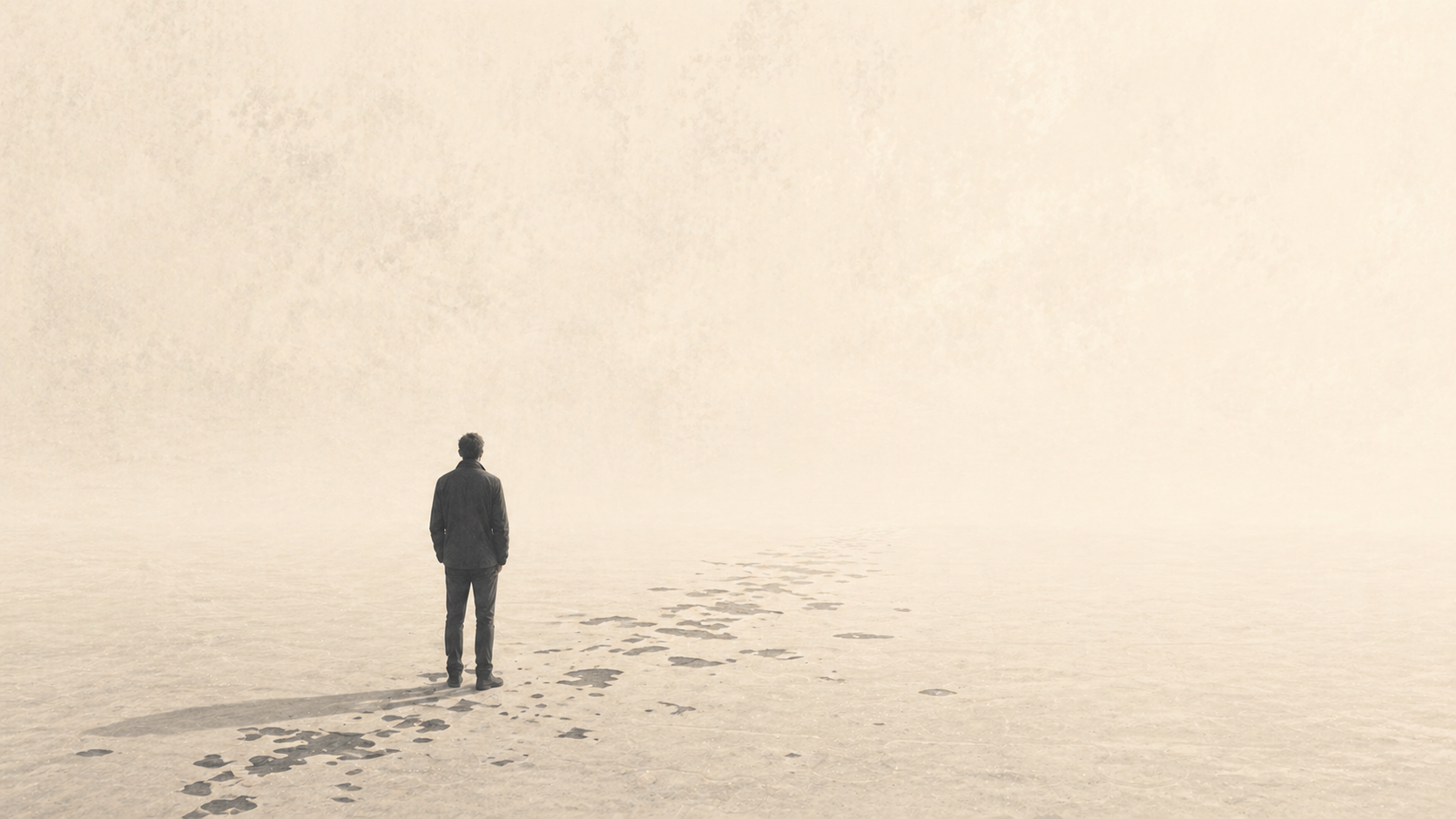
The Exhaustion of Solving Puzzles
When patterns stop surprising you
“That’s the job, sometimes. When the cost we pay for our missions, for our choices … comes due.” — Una Chin-Riley to Captain Pike, Strange New Worlds
I shed a tear when I heard that line. It was not just dialogue written for a starship captain; it was a mirror held up to life itself. The words landed like an indictment of awareness, a recognition that choices, patterns, and missions all carry a debt, and sooner or later, the cost arrives.
The Curse of Foresight
Intelligence often feels less like a gift and more like a curse. My training as a data scientist, a builder of systems, and a student of psychology has sharpened my eyes for patterns. Where others see headlines or isolated events, I see trajectories. I notice the rhymes of history, the repeating arcs of decline, the way choices ripple forward into collapse.
The problem is not in the seeing. The problem is in living with the knowledge once the pattern has emerged. Foresight is rarely a crystal ball, but it is a map of likelihoods. On that map, the paths converge. The destinations are familiar. Others may dismiss this as negativity. Yet there is a difference between cynicism and observation. Cynicism expects failure. Observation simply recognizes the weight of momentum.
A War Without Declaration
I believe we are already in the early stages of World War III. It is not a war with declarations, parades, and frontlines. It is a war fought through destabilization: economic pressure, weaponized information, alliances fraying, civic trust dissolving. The shape of this war is quieter, but no less dangerous.
Modern conflict arrives not in explosions alone but in collapses of supply chains, in algorithm-driven radicalization, in neglected infrastructure that fails when it is needed most. To some, these events seem disconnected. To me, they are puzzle pieces clicking into place with dreadful familiarity.
Survivor’s Guilt and Something Beyond
I know survivor’s guilt. I was in the North Tower on the morning of 9/11. My team had the foresight to evacuate immediately after we felt the impact and saw fire falling from the sky. I remember hearing sounds on the roof of the mezzanine. At the time, I did not understand what they were. Later, watching the news, I realized.
Survivor’s guilt is why did I make it out when so many others did not? Why did I survive when entire firehouses ran in to save people and never returned? Why was it me instead of the mother or father with a young child waiting at home? That is survivor’s guilt. I have lived with it.
What I feel now is not that. This is something harder to name. It is not guilt for having survived. It is exhaustion from watching catastrophe assemble itself in real time. It is the burden of solving the puzzle before others will even admit there is a puzzle. Survivor’s guilt looks backward. This looks forward.
The Psychology of Patterns
Human beings are wired for patterns. Most deploy that skill for everyday life: anticipating a reaction, recognizing danger, remembering a shortcut. For some of us, that wiring scales upward. A glance at data, a shift in rhetoric, a policy decision—and the outlines of the future begin to take shape.
The torment is not in seeing. The torment is in repetition. How many times have warnings been ignored until it was too late? Financial bubbles, extremist movements, ecological collapse. The puzzle does not change, only the faces and dates. To live with that awareness is to feel out of step with the world.
Puzzles, Childhood and Adulthood
When I was young, puzzles were joy. Each piece that fit brought delight. The picture was always one of order emerging from chaos.
As an adult, puzzles are dread. Each piece that locks into place reveals not beauty but inevitability. The completed image is the same one over and over: greed hollowing out stability, arrogance masquerading as leadership, collapse disguised as progress. Solving the puzzle no longer feels like triumph. It feels like sentencing.
Systems and Failure
Every system carries failure states. As a designer, I know that no redundancy can last forever. The weakness is rarely technical. It is human. Greed, denial, fear, arrogance—these corrode safeguards faster than entropy. Systems break because people choose blindness until collapse forces sight.
The Exhaustion of Clarity
Clarity is heavy. Each recognition is a toll. Each puzzle completed drains rather than restores. The exhaustion lies not in the data itself but in the exile it creates. To see clearly while others refuse to is to live suspended between knowledge and impotence. You cannot unsee, yet you cannot compel others to act.
The Mission of Light
The cost always comes due, yet the mission remains. The task is not to prevent collapse single-handedly, because that is impossible. The task is to carry light into the collapse. To be the warmth for others when the cold sets in. To be life, when death surrounds.
The mission is not solution. The mission is presence.
Choosing Humanity
Perhaps this is what it means to stay human when the world cracks: to resist despair not by denying reality but by choosing light anyway. Intelligence without compassion becomes cruelty. Foresight without warmth becomes arrogance. The exhaustion of solving puzzles is real, but it does not excuse abandoning the work of bringing light.
To be intelligent in a collapsing world is to live with unbearable clarity. To be human in that same world is to keep the light burning anyway.

Subscribe to Amid the Noise
Amid the Noise is an ongoing body of work on signal, systems, governance, AI, and the structures that shape human judgment under pressure.
Subscribe to receive new essays as they are published.