The Architecture of Scarcity
What reconstruction teaches that stability forgets
When my friends from London spoke of childhood, they did not reminisce about playgrounds or comic books. They remembered reconstruction.
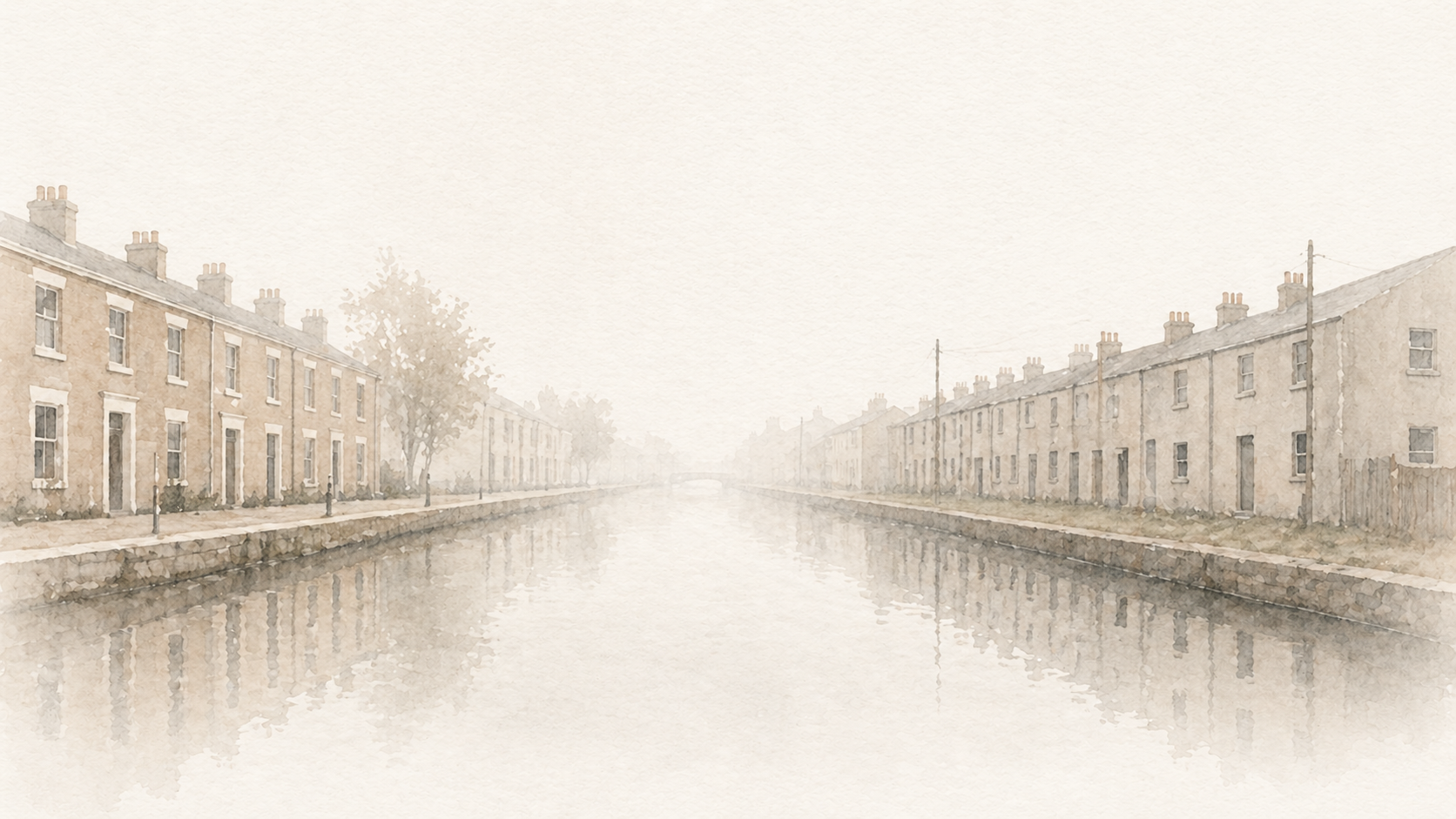
Their neighborhood, like many built after the Blitz, was pieced together in haste. One side of the canal had solid postwar housing—brick, deliberate, almost proud. The other side, where they lived, was smaller, thinner-walled, and rushed. You could sit on the toilet and fry an egg without moving your feet. It was not charm. It was constraint made visible.
They grew up in a landscape that carried both gratitude and grief. Every building was a reminder that something had been lost, and that survival carried its own kind of debt.
Humility was learned by proximity: to comfort, to ruin, and to the ghosts of both.
I often think about how a generation born into reconstruction carries a different kind of patriotism. It is not the flag-waving sort. It is the quiet diligence of those who know what happens when systems fail, when streets crumble, when home becomes a privilege instead of a right.
I grew up in Oklahoma, where scarcity took a different form. My grandparents had ration books from the war and Dust Bowl grit in their blood. They taught me to finish everything on my plate, to keep a jar of bacon grease by the stove, and never to discard what might be needed again one day. Their version of reconstruction was internal—a rebuilding of trust in nature, work, and providence.
America never faced the kind of aerial devastation that reduced London to ash. Our scars are less visible, our lessons more abstract. Yet that difference has consequences. Nations that rebuild from rubble remember fragility. Nations that never fall too far forget it.
That is what worries me most about our current state of national security: not the threats we can see, but the humility we have lost. We no longer live beside ruins that remind us why resilience matters. Our crises arrive as headlines, not craters. Without reconstruction, we risk mistaking stability for strength.
Somewhere in that canal between the sturdy and the fragile, the comfortable and the compromised, lies the question we should all be asking:
What happens to a country that has never had to rebuild itself, and will it know how to do so when the time comes?

Subscribe to Amid the Noise
Amid the Noise is an ongoing body of work on signal, systems, governance, AI, and the structures that shape human judgment under pressure.
Subscribe to receive new essays as they are published.