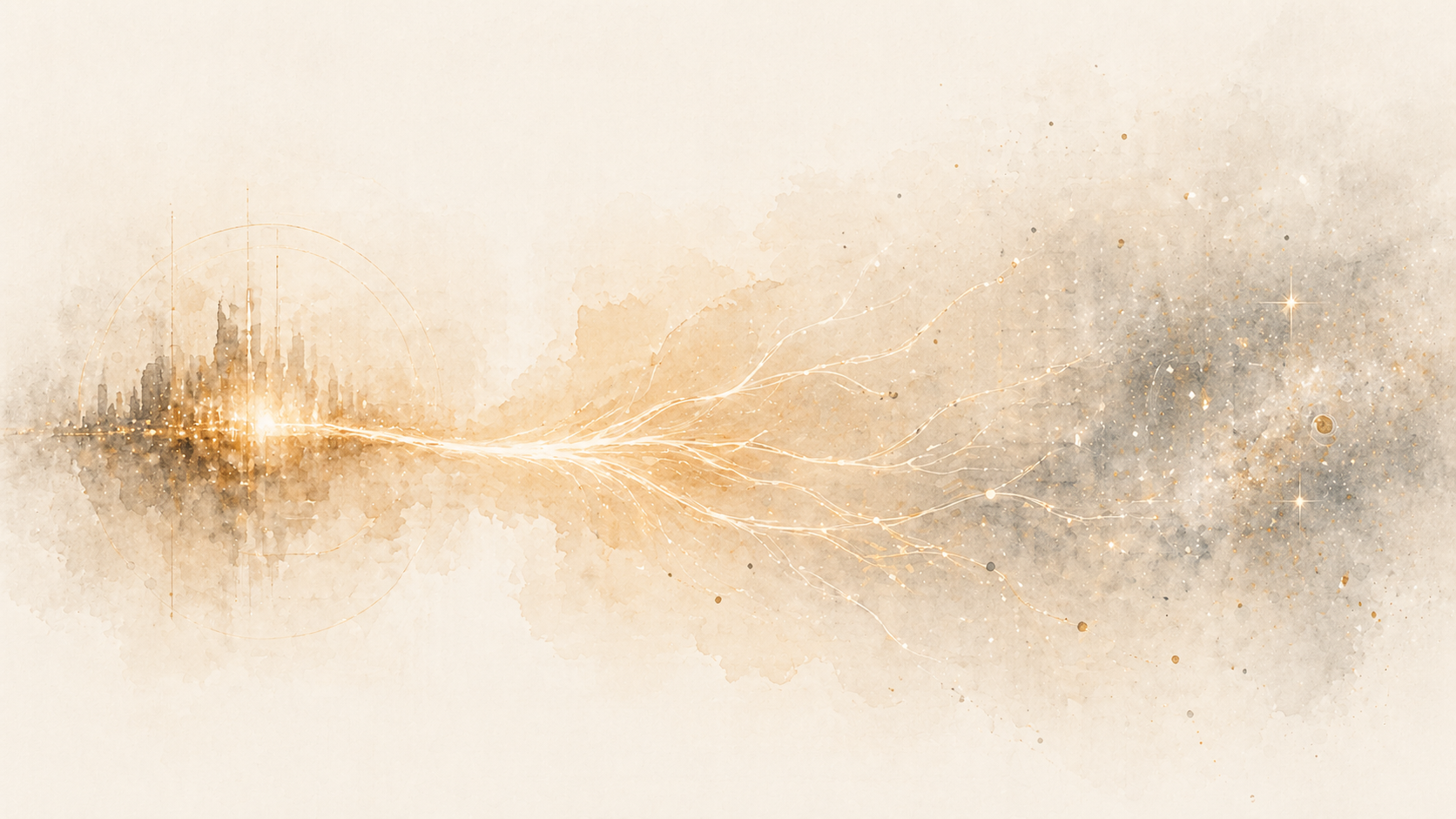
Radiance and the Stars
Circulation is survival
We often discuss power—who has it, who doesn’t, and how to change its flow. At its core, power is energy: potential waiting for direction. The same laws that rule our cities also govern our stars. When shared, radiance brings life. When hoarded, radiance collapses under its own weight.
This essay traces a universal pattern: how energy—economic, civic, or cosmic—must circulate to survive.
In Atlanta, we witness ignition, a single radiant city generating more light than the rest of its state combined. Its growth, if balanced with distribution, could transform Georgia. If not, it risks imploding beneath its own brilliance.
In Northern California, we encounter a more complex organism: a constellation of radiant cores—San Francisco, Oakland, San Jose—each pulsing with innovation, each learning to breathe through the Central Valley and Sacramento. Here, the challenge is no longer creation, but circulation.
Finally, we move outward. We look to the stars not as escape, but as equilibrium. If humanity is a single radiant species, then leaving Earth is not conquest—it is continuity. Energy that remains trapped at the core, whether in a city or a civilization, collapses. The only true sustainability is motion.
From Atlanta to the Bay to the boundless, the principle holds:
Radiance is not dominance.
It is stewardship of light.
Act I — Atlanta: The Birth of Radiance
Every great system begins with ignition.
Atlanta is Georgia’s central hub, a city that blazes hotter, faster, and brighter than the rest of the state combined. The world recognizes its skyline, its airport, its pulse. What defines Atlanta is not only the light itself, but how far that light reaches.
Radiance is energy in motion. Distribution is energy in action.
When a city generates immense economic and cultural power, it faces a choice: distribute that energy outward and support surrounding regions, or let it concentrate inward until the core collapses. The physics resemble those of a star. Fusion creates brilliance. Without balance, gravity takes over.
If high-speed rail connected Atlanta to Macon, Warner Robins, and Savannah, Georgia would cease to be divided by geography and instead become a unified metabolic system. Each town would act as a cell in a living organism. Labor could move cheaply and easily. Local economies could synchronize. The city’s radiance would no longer blind. It would illuminate.
This is not charity. It is thermodynamics.
When energy is trapped at the core, the center collapses.
When energy flows, the system breathes.
Atlanta’s lesson is that prosperity must behave like light: steady, generous, self-sustaining. Every dollar that leaves its downtown and invests in capacity elsewhere is not lost. It is reflected. Equity becomes efficiency. Distribution becomes resilience.
If Atlanta learns to shine without wearing itself out, it becomes more than a city. It becomes a model for how modern civilization can endure its own pull.
Act II — Northern California: The Law of Circulation
Where Atlanta is ignition, the Bay Area is resonance.
Radiance in Northern California does not emerge from a single star but from a constellation: San Francisco, Oakland, San Jose, and Palo Alto, each burning at its own temperature. Together, they form a living system of innovation, capital, and motion. That brilliance has a shadow—inequity, displacement, and the slow dimming of its edges.
To sustain itself, the Bay must learn to circulate.
Economic energy already flows eastward through Livermore, Tracy, and Stockton toward Sacramento. Each migration of labor and capital stretches the region’s gravitational field, binding once-separate cities into an interdependent organism. This is not suburban expansion. It is diffusion, a transformation from place to system.
Completion of high-speed rail would close the loop, allowing the Bay’s radiance to match its reach. The Central Valley would no longer orbit the Bay. It would be part of it. That is the moment radiance becomes resonance.
In civic terms, this means reinvesting in the periphery while maintaining the core.
In human terms, it means designing systems that breathe: intake, exchange, release.
Atlanta teaches ignition. The Bay teaches balance.
Every radiant body, once self-sustaining, must circulate its energy back through the ecosystem that feeds it. This is not merely economic. It is existential. The brightest light is not the one that burns the longest. It is the one that learns to breathe.
When cities learn to breathe, civilizations begin to evolve.
Act III — Outward: A Theory of Radiant Expansion
When energy is trapped at the core, the center collapses.
That principle governs both stars and civilizations.
Humanity itself is a radiant phenomenon—burning with the energy of creation, language, and thought. We are approaching the limits of containment. Our brilliance strains against the boundaries of a single world. If we fail to circulate that energy outward, we risk implosion under our own gravity.
Expansion is not ambition. It is respiration.
When we extend life, consciousness, and creativity beyond Earth, we are not escaping. We are balancing. Space becomes the next feedback loop in humanity’s long experiment with radiance.
In the same way Atlanta radiates through Georgia and the Bay circulates through California, humanity must distribute its light across the stars. Every planet settled, every satellite built, every act of discovery participates in the same law: radiance survives through circulation.
The insight is simple.
The universe rewards motion.
Entropy punishes stagnation.
We do not go to the stars to dominate them.
We go to keep the light from folding in on itself.
The same principle that sustains a city sustains a species:
We live only as long as we share what we shine.

Subscribe to Amid the Noise
Amid the Noise is an ongoing body of work on signal, systems, governance, AI, and the structures that shape human judgment under pressure.
Subscribe to receive new essays as they are published.