Peek-a-Boo Was Never Innocent
Early games, lasting patterns
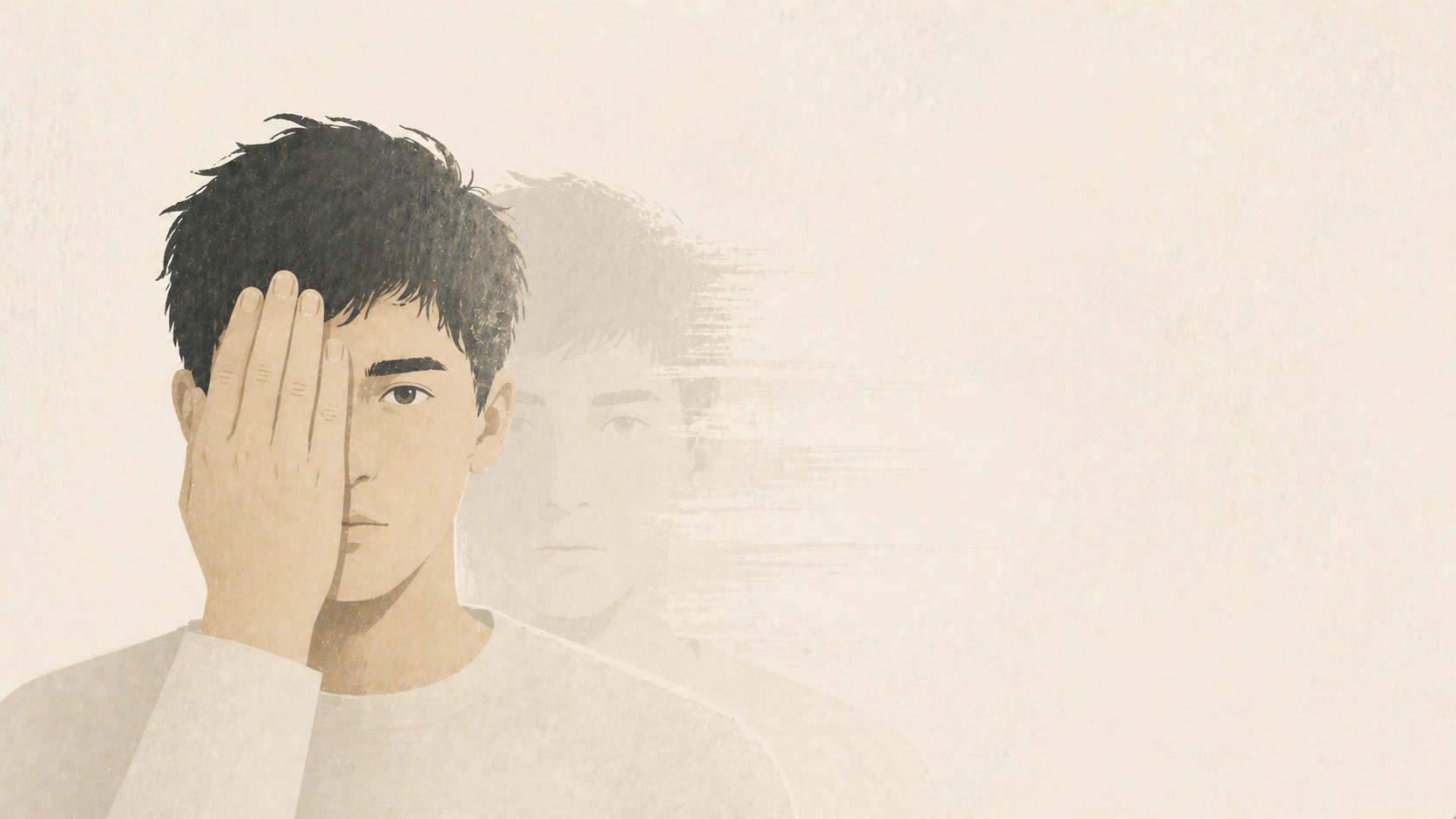
I remember the first time I saw a baby freeze in that breathless silence—eyes wide, searching, mouth caught between a laugh and a cry. A pair of hands covered the caregiver’s face. Gone. The pause lingered. Then the reveal: the face reappeared, grinning, and the room erupted in laughter.
For everyone watching, it was adorable. For the child, it was something else.
The Disappearing Act
Peek-a-boo has always been presented as harmless play. Beneath its giggles is a simple lesson: what vanishes may return.
Psychologists describe this as the emergence of object permanence, the knowledge that something continues to exist even when it cannot be seen. To the adult, covering one’s face is a trick. To the child, it is rupture. My world is whole. Now it is not. My world is whole again.
Trust begins here.
Rehearsal for Trust and for Loss
Peek-a-boo teaches the possibility of reunion. It also introduces the possibility of absence. The child is asked to tolerate not knowing. Will the face return? How long must I wait?
Attachment theory explains why this matters. The infant bonds to a primary caregiver, whose reliability forms the template for future relationships. Peek-a-boo stages that reliability. I go. I come back.
There is a quieter implication. Not everything returns. Some ruptures do not resolve. The game rehearses trust, but it also familiarizes us with waiting.
A Game We Never Stop Playing
We do not outgrow the pattern. We change the players.
The lover who disappears and returns with explanations. The friend who ghosts and reappears as if nothing happened. The colleague who vanishes midstream and resurfaces when the outcome is secure. The rhythm holds: disappearance, reappearance, normalization.
The question lingers. Is the relief genuine, or simply practiced?
Why This Matters
In adulthood, absence and return are not games. They are breakups, betrayals, layoffs, estrangements. The early rehearsal is already in place. We learned, before language, that disappearance can be endured. We also learned to wait.
Culture reinforces the pattern. In the West, peek-a-boo is nearly universal. Other societies emphasize touch, rhythm, or mimicry instead. Different openings, different assumptions. One centers disappearance. Others center continuity.
A Personal Reckoning
Looking back, the pattern is easy to see. Moments where I expected return because I had learned to. Moments where waiting felt like the correct response.
It rarely was.
The rhythm persists. Hiding and revealing shape how intimacy is experienced, how absence is interpreted, how faith is extended.
What We Carry Forward
Peek-a-boo was never innocent. It was instruction. It taught resilience, but also longing. It introduced the tension between presence and absence, safety and rupture.
We can still laugh at the game. We should also recognize what it carries. Some of our earliest experiences are not trivial. They are blueprints.
The question is not whether the game was innocent. It is whether we continue to play it.
Because in adulthood, the stakes are no longer playful. They decide how we love, how we wait, and how we survive.

Subscribe to Amid the Noise
Amid the Noise is an ongoing body of work on signal, systems, governance, AI, and the structures that shape human judgment under pressure.
Subscribe to receive new essays as they are published.