Lunch with the Mayor
Presence recognizes presence
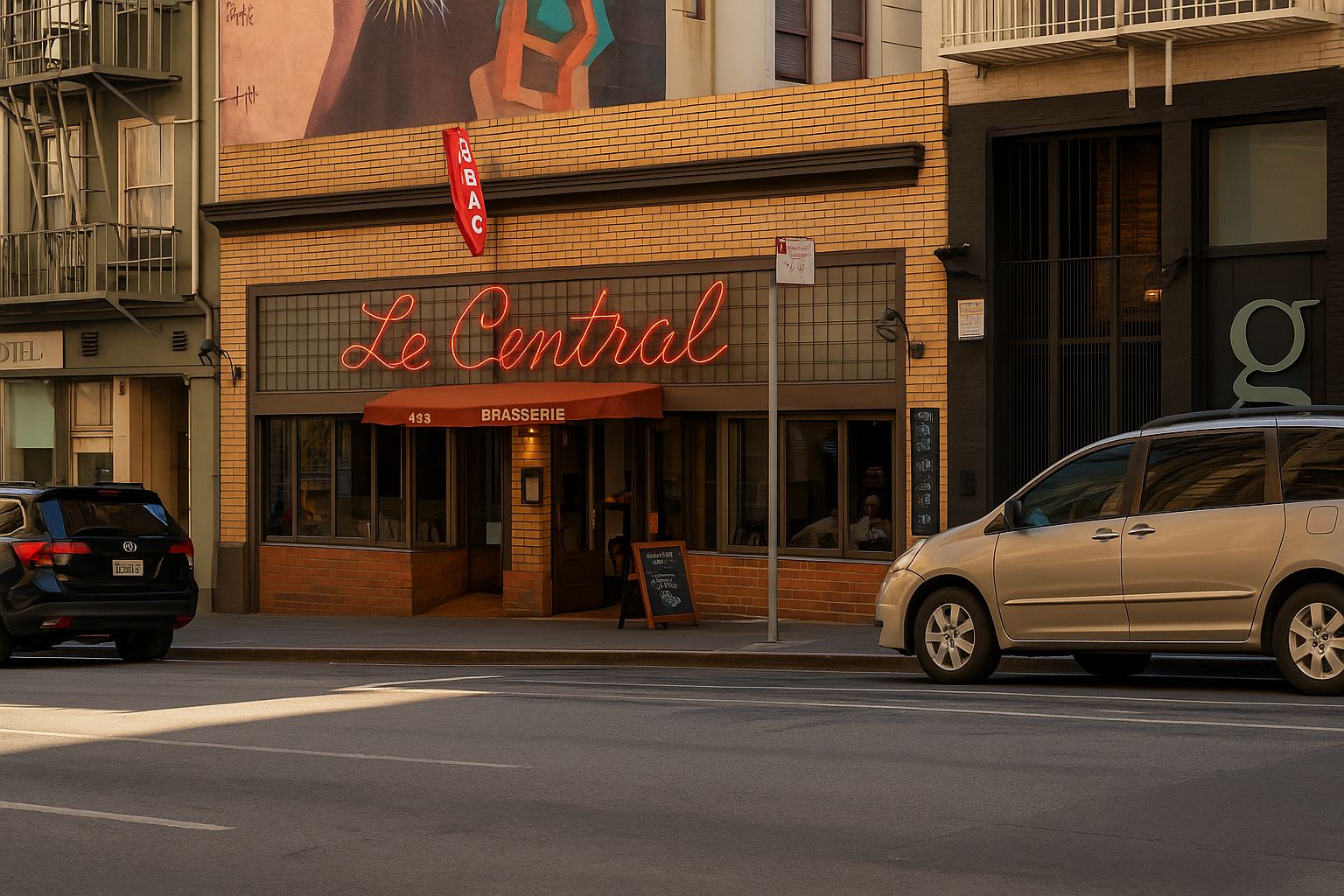
I went to celebrate a birthday with an old friend—the cassoulet at Le Central—and ended up sharing a table with a living legend.
Le Central has always been my place. A French restaurant where the servers still wear ties and nothing needs to prove itself. No reinvention, no theater. Just San Francisco: brass fixtures, dark wood, the soft clatter of plates.
The cassoulet has been simmering since the restaurant opened in November 1974, thirteen months younger than I am. We’ve both aged in public. Quietly deepening.
It was just past lunch on a Friday, the hour when the city exhales. Outside, the streets had gone still. Inside, maybe seven other diners spoke in low voices. I was the only one alone. The maître d’ placed me at a small corner table facing the bar.
I ordered Badoit. The small bubbles. Precise, almost self-assured, rising in a green glass bottle like they have somewhere to be.
Then a voice cut through the room from another era.
Willie Brown.
He stood near the bar, unmistakable. The suit carried him as much as he carried it. Orange and black, patterned just enough to catch the light. A hat pulled low, like he was hiding in plain sight.
He was on the phone.
“Well, Willie Brown thinks this.” A pause. “You’re not coming? I see. I understand.”
He hung up, scanned the room, and walked over.
“Are you dining alone?”
I nodded.
“Mind if I join you?”
Just like that, he sat down at my table. My birthday table.
He removed his hat, straightened his tie. “I can’t stand eating alone. Too quiet. Makes me think I’ve been left out.”
“Sometimes the quiet’s the point,” I said.
He smiled. “Then you must have something worth listening to.”
We talked for an hour. The city, politics, what it means to stay visible over time. He said San Francisco used to feel like a place where people knew who they were becoming. “You could feel it,” he said. “Now people spend their time trying to remember who they were.”
I told him a piece of my own story. The reset. The rebuilding. The parts that didn’t survive the year.
He listened without interruption. Then, quieter, “Sounds like you’ve done something this city hasn’t figured out yet. You found yourself. Most people don’t. The ones who do change the room without trying.”
He held that for a moment, then added, “I didn’t become Willie Brown until I knew exactly who I was. After that, everything else followed.”
A small nod. Not performative. Final.
“I’m proud of you,” he said. “Keep becoming.”
When the check came, he waved it away. “Civic duty,” he said, almost amused.
He stood, adjusted his hat, and left. The room shifted slightly after him, like something had passed through.
I stayed a while longer. The last of the Badoit still rising, still precise. Tiny bubbles finding their way to the surface, one after another.
At ninety-one, he is still in motion. Still showing up. Still finding someone to share the table.
People talk about attraction as if it’s a mechanism. It feels closer to alignment.
This year stripped things down. What stayed feels deliberate. What left needed to.
As I turn fifty-two, I notice something simple. The less I try to force the moment, the more it arrives on its own terms. A talk I once thought was out of reach is now real. A lunch that should have been ordinary became something else entirely.
I don’t read that as coincidence. I read it as readiness.

Subscribe to Amid the Noise
Amid the Noise is an ongoing body of work on signal, systems, governance, AI, and the structures that shape human judgment under pressure.
Subscribe to receive new essays as they are published.