Rebuilding California’s Homelessness Systems from First Principles
Dignity as system behavior
Executive Summary
California does not lack funding, programs, or intent.
It lacks systems that people can survive long enough to use.
The state’s homelessness response has become an optimization problem detached from the people it claims to serve. Billions move through fragmented systems that measure throughput, compliance, and eligibility, while individuals encounter confusion, repetition, and the steady erosion of trust.
Most systems that interact with unhoused individuals are not experienced as support structures.
They are experienced as hostile, non-consensual environments.
Intake processes compel disclosure, repetition, and compliance under cognitive strain, with little agency over pacing, narrative, or mode of engagement. In practice, the system functions less as a service and more as an exposure to administrative power, often echoing the conditions it claims to resolve.
This paper reframes homelessness as a systems design failure. Using human-centered design, trauma-informed practice, and service-journey simulation grounded in municipal workflows, it shows how public infrastructure can restore agency, reduce friction, and improve outcomes without increasing staff burden.
The system is behaving rationally according to the wrong objective function.
When systems respect cognitive reality and human signal, people re-engage.
Dignity becomes operational.
The Core Failure
Homelessness services are designed as though users are stable, resourced, and cognitively unburdened. Many are not. Trauma, sleep deprivation, executive dysfunction, and institutional distrust shape how these systems are experienced.
Current systems reproduce harm through predictable patterns:
- Fragmented intake across agencies with no continuity of narrative
- Repetitive retelling of traumatic histories to unfamiliar staff
- Language that frames people as risks, exceptions, or compliance problems
- Long periods of silence following critical actions
- Physical and digital environments that exclude neurodivergent users
The result is disengagement. Programs appear underutilized. Withdrawal is misread as apathy or non-compliance when it is often a rational response to incoherent design.
Constraints exist for reasons such as funding accountability and fraud prevention. The failure is not their presence. It is their dominance. Human signal is treated as noise rather than input.
Reframing the Objective
The objective is not to streamline services.
The objective is to design for human reality.
This framework treats homelessness as a journey through interacting systems. Each touchpoint either reinforces or erodes agency. Success is defined by clarity, continuity, and user-held choice, not enrollment or throughput.
Methodological Approach
The framework integrates:
- Contextual inquiry with individuals who have lived experience
- End-to-end journey mapping across housing, benefits, healthcare, and documentation flows
- Heuristic evaluation of physical and digital environments
- Persona-based simulation using municipal process maps
Simulation inputs included HUD datasets, municipal 211 call logs, CalFresh onboarding friction metrics, and peer-reviewed research on trauma, cognitive load, and executive function. Redesigned pathways were tested against baseline systems to observe directional differences in outcomes.
Where the System Breaks Down
Cognitive Overload
Forms, appointments, and documentation assume uninterrupted attention and intact executive function. Trauma breaks that assumption. Abandonment follows early and often.
Language as Power
Terms such as “non-compliance” and “eligibility review” encode hierarchy. They position the individual as suspect and the system as arbiter. Trust degrades before help begins.
Interface Mismatch
Fluorescent lighting, crowded offices, dense paperwork, and inaccessible digital tools exclude those with PTSD, ADHD, or sensory processing challenges.
Silence After Action
Applications disappear into administrative voids. No confirmation. No timeline. No signal that effort mattered. Silence converts effort into disengagement.
Simulated Impact of Human-Centered Redesign
Modeled outcomes, based on calibrated municipal datasets, indicate consistent directional improvements when systems are redesigned around clarity, continuity, and user choice:
- Increased service engagement
- Reduced housing placement timelines
- Improved trust indicators
- Faster eligibility confirmation
- Lower dropout among high-barrier users
The magnitude varies by context. The pattern does not.
These improvements do not require additional staffing. Automated confirmations, clear task hierarchies, and user-selected communication channels reduce missed appointments and follow-up churn.
The most important finding is qualitative. People re-engage when the system treats them as participants rather than problems.
Operational Model
The redesign does not introduce complexity. It removes incoherence.
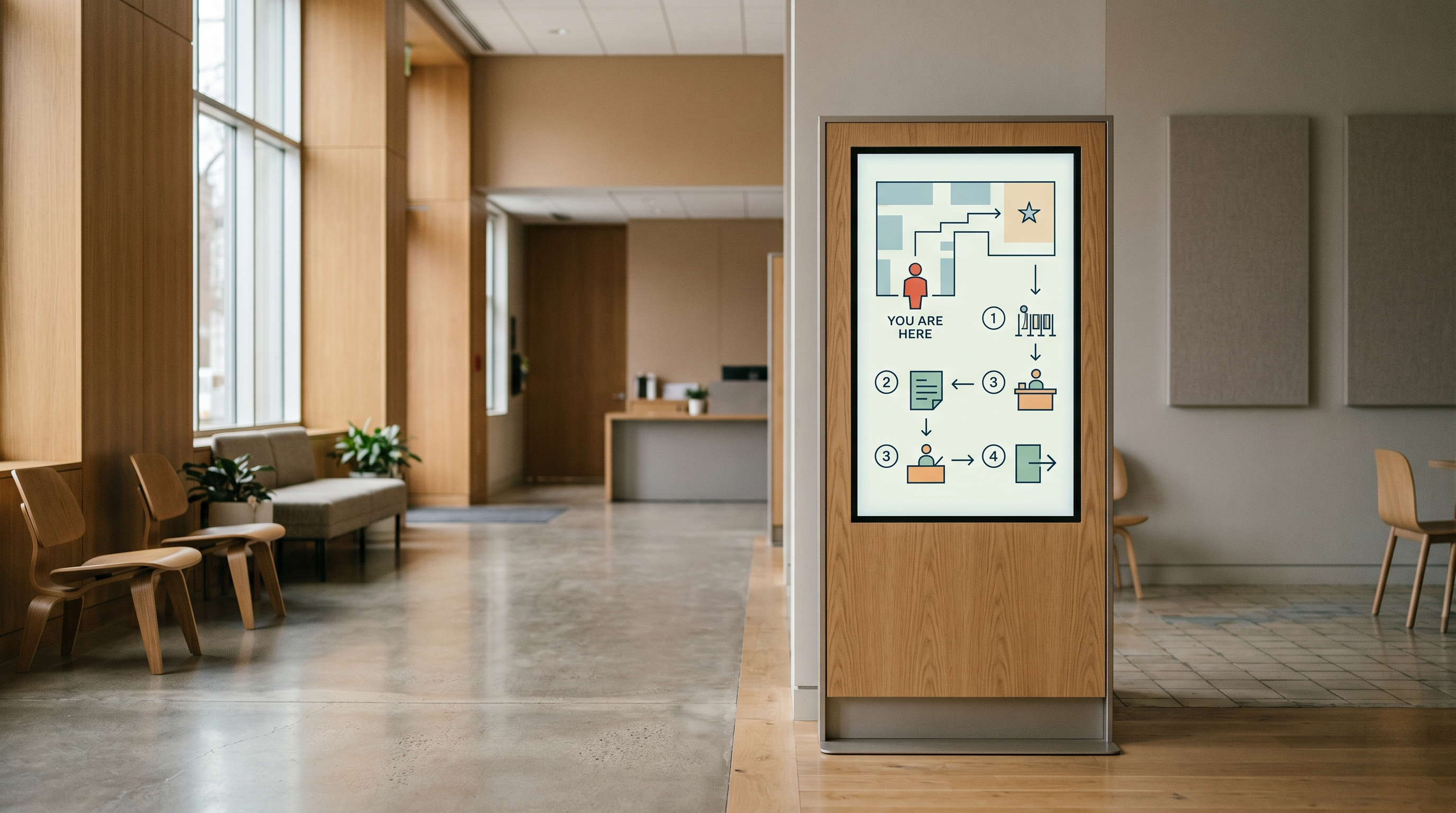
Intake becomes a persistent process rather than a single event.
Each individual maintains a continuous interaction with the system rather than restarting at every touchpoint.
Users receive a clear state view: what has been completed, what remains, and what is blocked.
Narrative continuity replaces fragmented forms. Agencies interact with a shared, user-held record rather than independent documentation silos.
Silence is removed. Every action produces acknowledgment, status visibility, and next steps.
These changes shift the system from episodic processing to continuous engagement.
The Proposal
A nine-month municipally sponsored pilot in a city prepared for civic innovation, such as Oakland, Sacramento, or Santa Rosa.
The pilot includes:
- Cross-department coordination among housing, human services, and digital teams
- Co-creation design sprints with frontline staff and individuals with lived experience
- A live beta integrating simplified intake, trauma-informed language, and real-time status visibility
- Continuous feedback loops and iterative refinement
- A public Civic Impact Report documenting outcomes and transferability
Governance would include defined data-sharing agreements, privacy controls, and clear success thresholds for continuation or scale.
Timeline
Months 1–2
Stakeholder alignment, user research, system mapping
Months 3–5
Design sprints and prototype development
Months 6–7
Pilot launch with live iteration
Months 8–9
Evaluation, impact reporting, scale planning
Budget Range
$850,000 to $1.2 million
This includes multidisciplinary staffing, participant compensation, secure mobile-first infrastructure, accessibility improvements, trauma-informed training, independent evaluation, and public reporting.
The cost reflects alignment, not excess.
Conclusion
Homelessness persists not because people fail systems, but because systems fail people in consistent, measurable ways.
The current system is not overwhelmed. It is misaligned.
Design determines how power moves. When public infrastructure acknowledges cognitive reality, respects lived experience, and communicates with continuity, dignity becomes operational.
This is not charity.
It is competence.
Appendices: Persona Profiles
The Paperless Veteran
Marcus, 44, a Gulf War veteran living in his vehicle in Alameda County, lost all identification after a theft. PTSD disrupts memory recall. He qualifies for services but cannot access them.
The system fails the moment it requires proof he cannot reconstruct.
Recommendation: biometric identity confirmation and integrated document recovery through mobile-accessible accounts.
The Anxious Mother
Lorena, 29, fled domestic violence with two children and now lives in transitional housing. Prior experiences create deep anxiety around formal systems.
The system fails when safety requires repeated exposure.
Recommendation: trauma-informed intake that reduces repetition and supports parent-controlled interaction.
The Chronically Shuffled
Darren, 51, has cycled through shelters, jails, and hospitals for 17 years. He understands the system and does not trust it.
The system fails when continuity resets at every handoff.
Recommendation: persistent, user-owned profiles accessible across agencies.
The Neurodivergent Young Adult
Shay, 22, aged out of foster care and struggles with executive function and sensory processing.
The system fails when structure assumes consistency that does not exist.
Recommendation: mobile-first, low-stimulus interfaces with progressive disclosure.
The LGBTQ+ Youth
Alex, 19, was displaced after coming out. Repeated misgendering during intake has created deep distrust.
The system fails when identity is treated as error.
Recommendation: peer navigators and affirming interaction design across all touchpoints.
Ethical Guidelines for UX with Vulnerable Populations
- Informed consent using clear, culturally competent language
- Minimization of harm and avoidance of unnecessary trauma disclosure
- Equitable compensation for lived-experience participants
- Privacy-first systems with user control over data
- Participatory design with individuals as co-creators
- Cultural competency across all teams
- Accountability through visible feedback loops
References and Citations
U.S. Department of Veterans Affairs (2023)
National Network to End Domestic Violence (2022)
Los Angeles DHS (2021)
RAND Corporation (2020)
National Health Care for the Homeless Council (2022)
Casey Family Programs (2019)
UCSF Child & Adolescent Transitions Lab (2020)
True Colors United (2022)
The Trevor Project (2021)

Subscribe to Amid the Noise
Amid the Noise is an ongoing body of work on signal, systems, governance, AI, and the structures that shape human judgment under pressure.
Subscribe to receive new essays as they are published.